
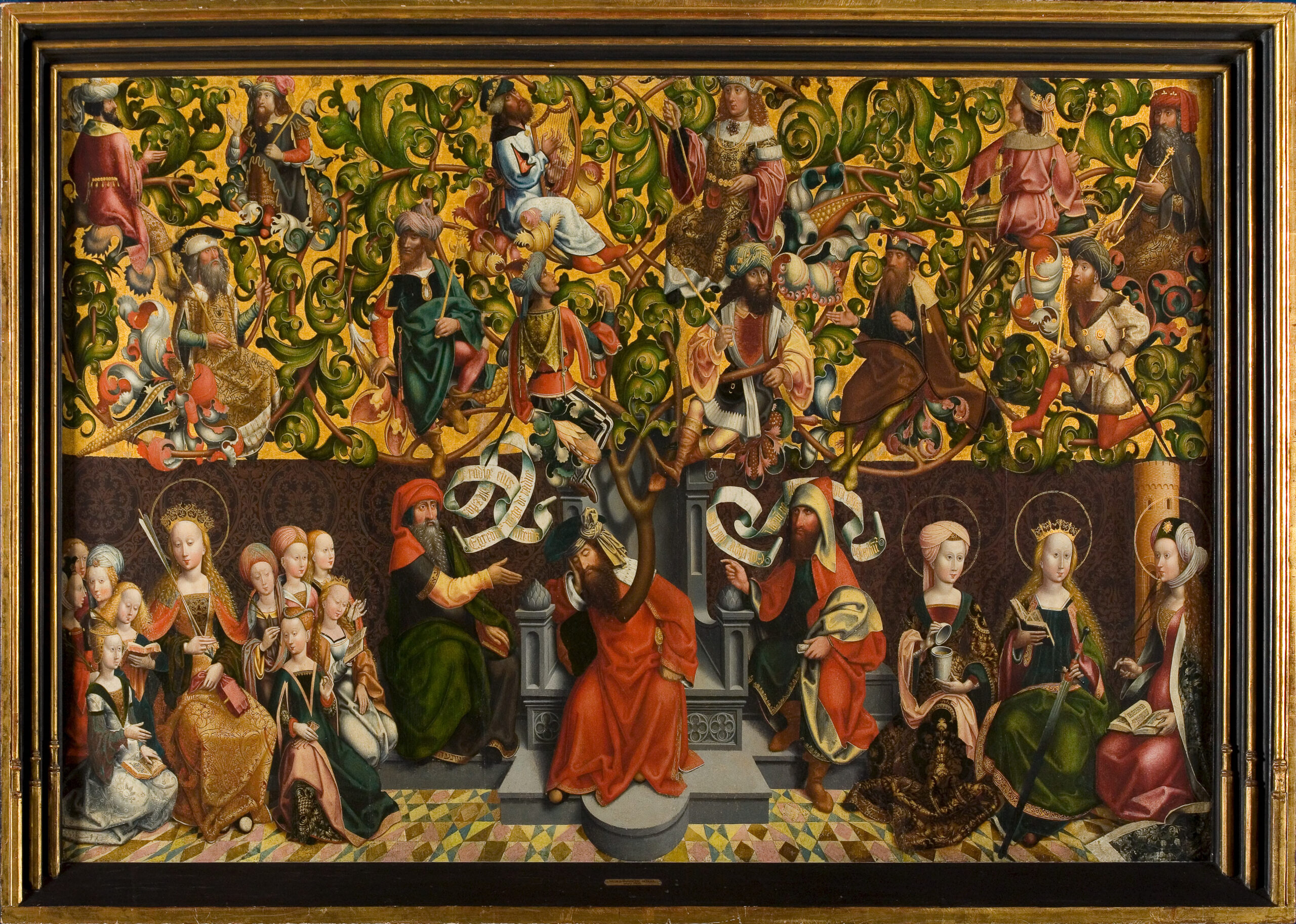
When people ask about the importance of the Old Testament prophets for today, it’s easy to note how the content of their preaching expresses a message so relevant. As the saying goes, “the more things change, the more they stay the same” – the sins the prophets preached against are the same that rear their ugly heads today. Yet as we approach Christmas via Advent, we also see that the prophets didn’t simply call people to repent (enthusiastically!), but also had much to say about the future birth of the Christ child.
In the Old Testament, there is a recurring image the prophets (Isaiah, Jeremiah, Zechariah, and Baruch, for example) use to signify the future coming of the Messiah, and that is the image of the “branch”. The most famous of these references to the “branch” comes in Isaiah 11:1, which is what the “Jesse Tree” devotion originated in: “There shall come forth a shoot from the stump of Jesse, and a branch shall grow out of his roots.” A “shoot” from the “stump of Jesse”…so who is Jesse? Father of David, slayer of Goliath, King of Israel, and inheritor of the promised covenant (see 2 Samuel 7, wherein God promises David that the kingship will never be taken from his line, indicating that the Messiah will be of David’s stock). So according to the prophecy in Isaiah, we read that the Messiah will come from Jesse, father of David. Why is this such a big deal though? Because there is a problem that arises…
King Zedekiah, heir to the throne of David, refuses to listen to the prophet Jeremiah about submitting to the Babylonian empire in the early 500s BC. Babylon, led by the infamous King Nebuchadnezzar, is the new world power, conquering everybody in their way, their sights set on Jerusalem. And Jeremiah says to submit, for it will be worse to fight back because this is God’s punishment for sin. So failing to submit would imply continued disobedience to God, further worsening the situation. Unsurprisingly, Zedekiah doesn’t listen, choosing to rebel, inciting a two-year siege on Jerusalem by Babylon. Eventually Babylon breaks through, Zedekiah and his sons flee, but are captured in Jericho, where Zedekiah’s eyes are gouged out after he watches his sons be killed. The Babylonians then burn everything down, from the kings house, to the people’s, to the Temple, to the city, and gather up everybody except a few poor people to ship into exile. This marks one of, if not the, lowest point in salvation history of the Old Testament.
Yet thankfully, as we’ll see in our next post, God will turn this all around through a “branch” to come…