
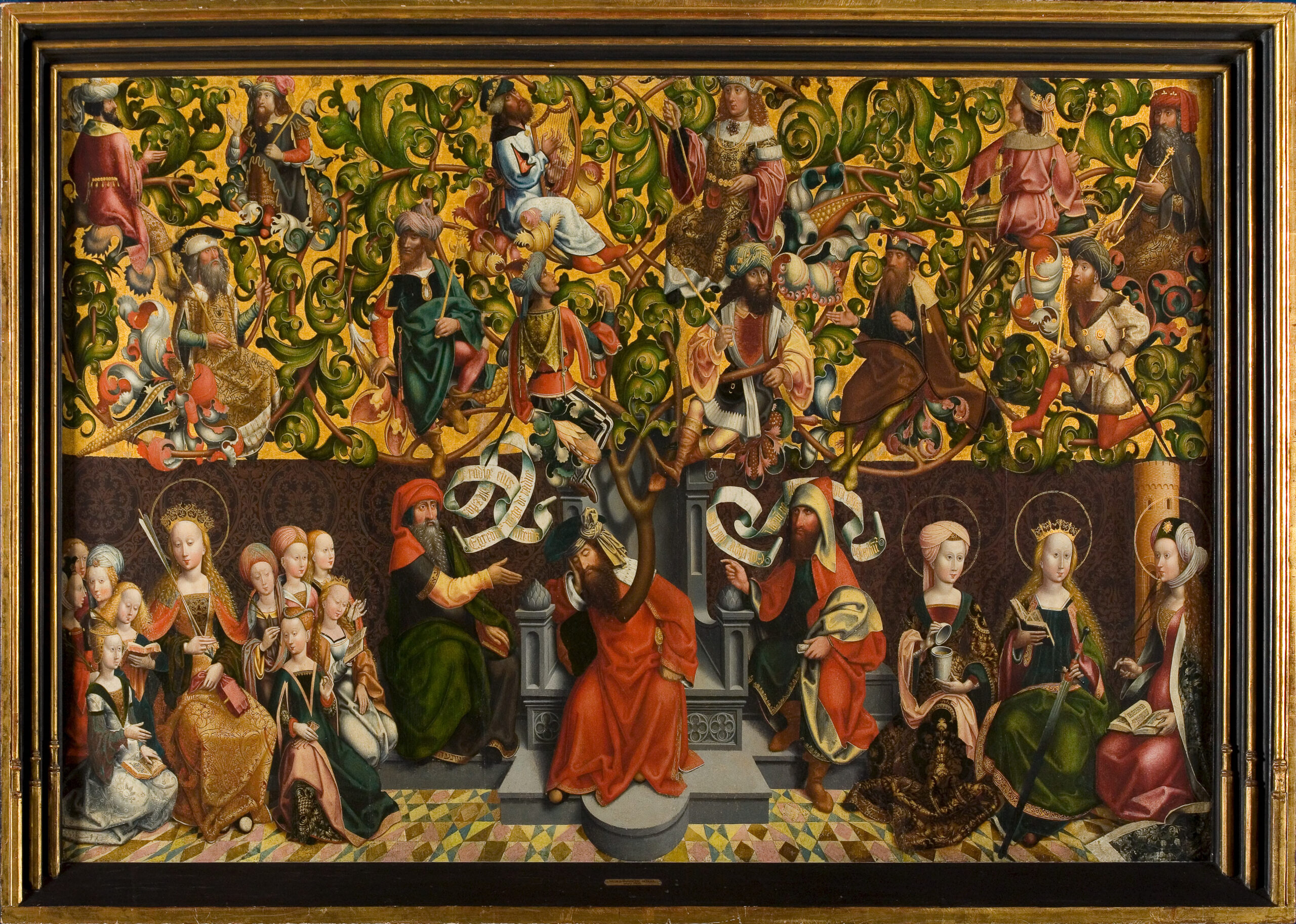
As we ended with our last post, the Babylonian exile marks one of, if not the, lowest point in salvation history of the Old Testament. At this point in 586BC, it looks like everything is lost. How is there any sense of restoration in the midst of this destruction? Especially because the Jews will never again have a Davidic king rule in the political sense. So by all accounts everything is done for and you’ll never recover, the covenantal promise to David revoked. What, then, gave the Jews any hope while off in exile? The likes of Isaiah 11:1 and the “branch” to come. Herein the Davidic kingdom is likened to a tree, a tree that is torn down with exile. So the “stump of Jesse” is the broken down kingdom of David in exile, for they were a great tree, now just a “stump”, looking like there’s no life to it. And yet, there will be a branch to rise of its roots, so there is still hope because God will raise up another king out of the seemingly hopeless, helpless exile. While from a human perspective everything with exile looks destroyed, the covenant with David done for, nonetheless you can still hang your hat on the promises of the prophets of a branch to come because God is and always will be faithful to His word. We may stray from God’s word, but He never does.
All of the above is what Advent, with its Jesse Tree devotion specifically, is meant to express as we prepare for Christmas. Throughout Advent we hear references to Christ’s ancestors in the Mass readings and then place ornaments on a “tree” – symbol of the Davidic Kingdom – with depictions of those ancestors of Christ. We’re trying to represent in our devotional practice this beautiful line that was promised to one day bear the Messiah, to show that Jesus is the branch to rise out of the roots of the stump of Jesse. The more modern form of the Jesse Tree also tends to be ornaments that don’t just depict the ancestors of Christ, but symbols of the gradual approach to the Messiah in salvation history. Starting with the creation of the world all the way to Christ, emphasizing not just the bloodline of Jesus, but how He is, on a much bigger level, the story of Israel and humanity coming of age, coming to a climax. Ornaments with symbols of Adam and Eve, Noah, Abraham, Moses, David, so on and so forth, all building up to Jesus, as we follow the course of salvation history from creation to the Flood of Noah, to the patriarchs, to the prophets, and finally to the time of Christ. All with the hopes of better understanding the mystery of what God and His love has done for us in salvation history. God promised a Messiah to come – Genesis 3:15 – and promised He’d come from the line of David – 2 Samuel 7 – and here I’m following that narrative thread through symbols on ornaments that I place on a tree to symbolize the Kingdom of David and the promise that the Messiah would rise out of its conquered and exiled ruins. For when we celebrate the birth of Jesus, we don’t celebrate just that event in itself (as grand as it is!), but that it is also the fulfillment of the long-standing prophetic promise for God to be with us, always faithful to His covenant promises. A fidelity that culminates in the Christ child we celebrate the birth of on Christmas day!