
In my post last week I focused on revelation, both natural and Divine. What I have yet to note are the means by which God Divinely reveals truths to us, of which there are two: Sacred Scripture and Sacred Tradition.
Sticking with the first, the Bible is not merely a human document, nor simply a collection of amazing stories that call us to do heroic things in life, nor yet a collection of wise sayings. Rather, the Scriptures are what we call “inspired.” St. Paul has a beautiful teaching about this in 2 Timothy 3:16-17:
“All scripture, inspired of God, is profitable to teach, to reprove, to correct, to instruct in justice, that the man of God may be perfect, furnished to every good work.”
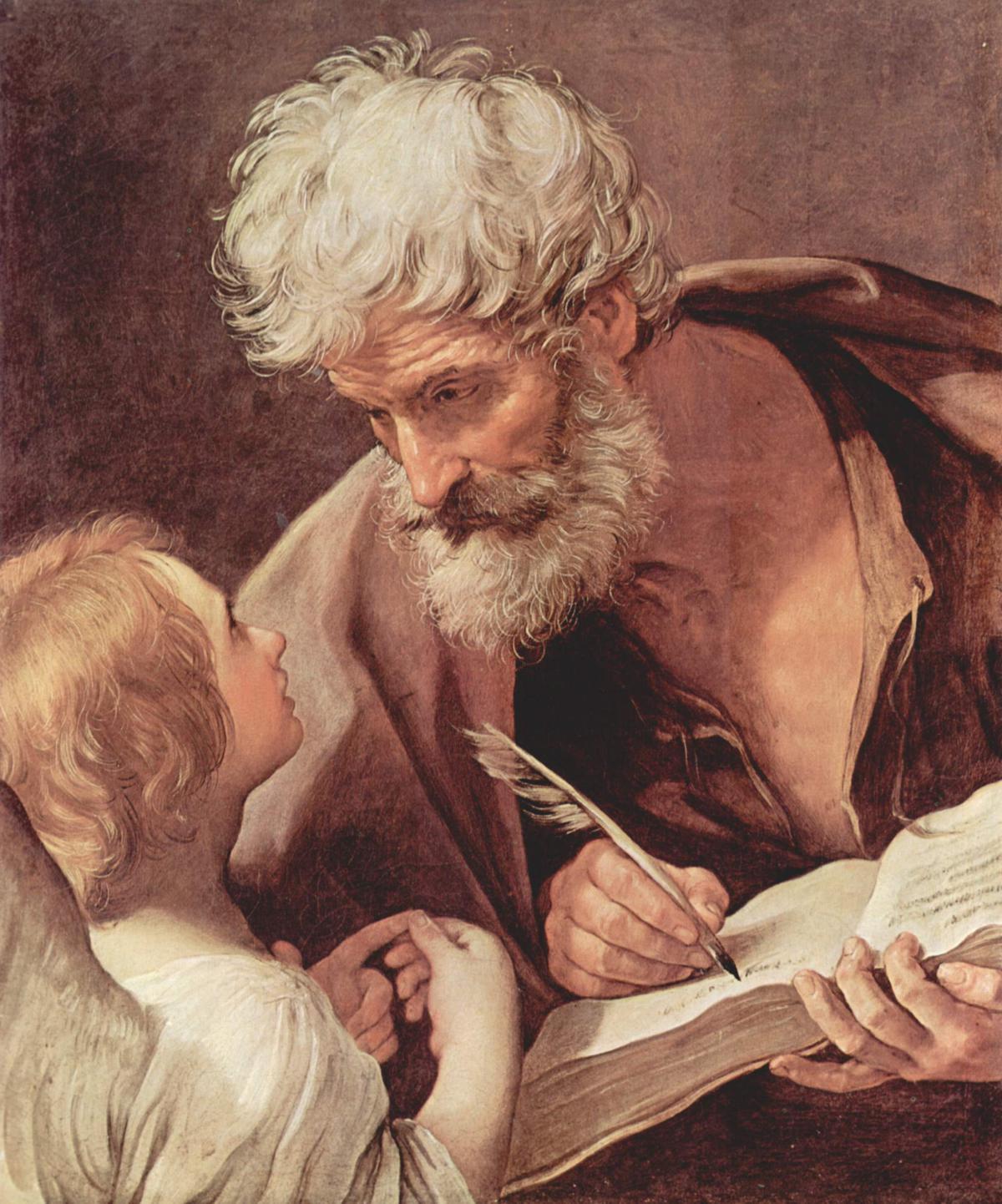
What we mean by “inspired” is that God is the principal author of the Bible. Certainly there were different men—Moses, Joshua, Isaiah, Matthew, Mark, Luke, etc.—who held the pen and dipped it in the ink and physically wrote the words on the papyrus. But these men were influenced by the grace of inspiration to write not just their own words, but God’s. And so the Scriptures are a mysterious congruence of Divine and human authorship—the human writers capably made full use of language, literary forms, genres, creativity, writing style, etc., to communicate their message, yet they did so under the grace of Divine inspiration. This means that while they wrote in such a way that they had full freedom to write whatever they wanted, what they wrote was also, “to a tee,” exactly as God wanted written. God is the principal author of the Bible, the human author its secondary writer.
Such inspiration is how, despite the various human authors, events, historical and cultural contexts, etc., behind the 73 Biblical texts, we are still left with only one story. The entire Bible, with all of its vast array of literature, is still only one book because all of the texts within have the same one principal author: God, Who is writing His story of salvation history.
This is what makes the Bible so powerful, unlike any other text. There are definitely some influential writers in human history that has had tremendous impact—a man like Aristotle has radically changed many people’s lives, for instance, with his writing on ethics, metaphysics, epistemology, rhetoric, and so forth. But no other piece of writing comes close to the power and influence of the Sacred Scriptures. People like St. Anthony the Abbot and St. Augustine were so profoundly influenced to change their lives by either hearing or reading a passage from Scripture, not simply because it tells a good tale, but because it is God Who wrote the story. For as Paul said in the above passage from 2 Timothy, Scripture is profitable to teach, to reprove, to correct, to instruct in justice, and it can help the man of God be perfect. And Scripture can have this power because it is the written word of God.