
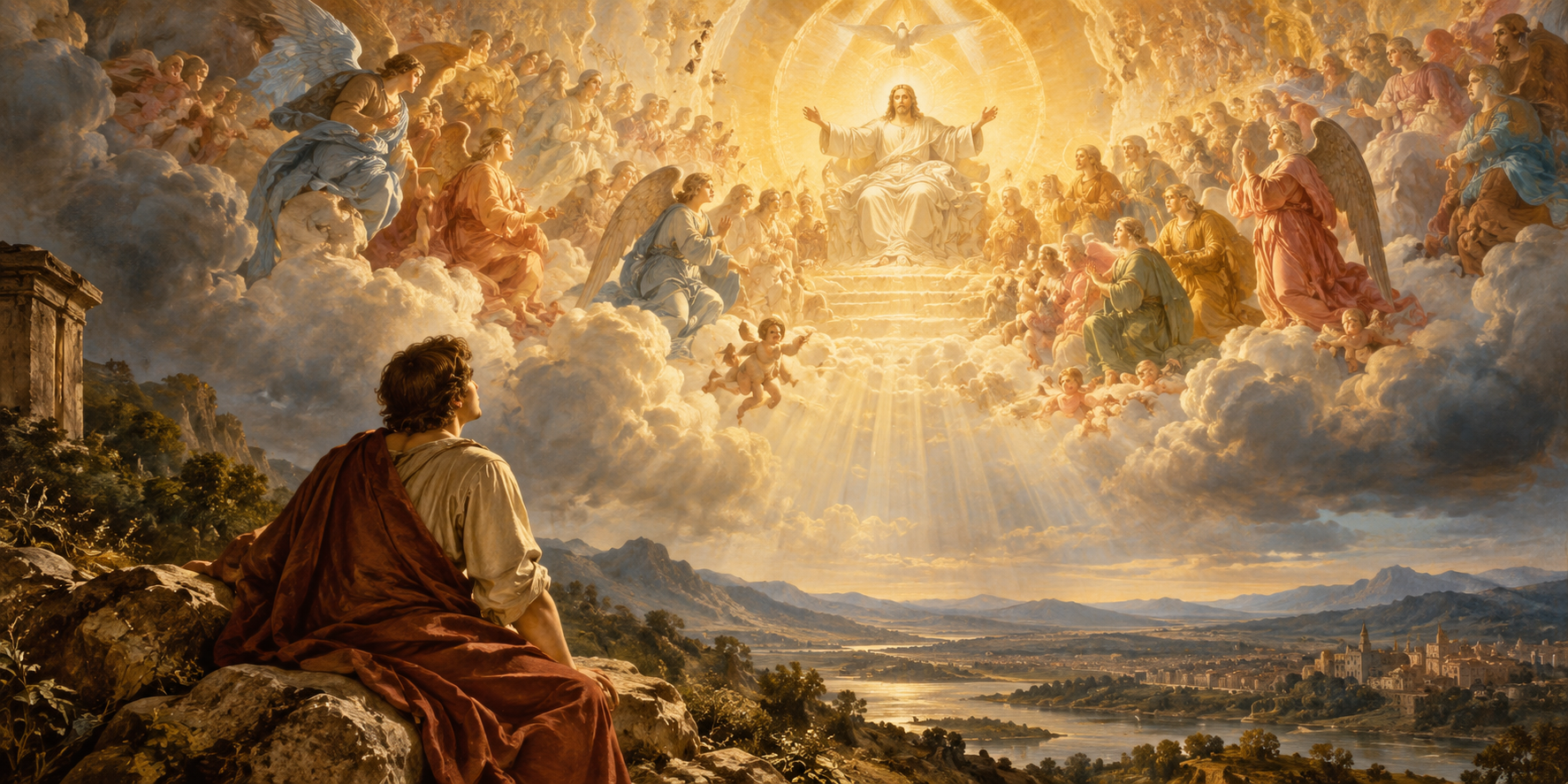
In theological terms, the word “revelation” is the word used for when God communicate— or unveils—a certain truth to us. This unveiling of truths from God to man comes in two ways: natural revelation and Divine revelation. Natural revelation is what we use to describe things like the truths of the natural world, such as self-evident principles or logical axioms. To give a concrete example, natural revelation is what we use to describe things like the natural law, those self-evident principles of the moral life that everybody can universally know (e.g., don’t kill, don’t steal, etc.).
How does this work? Very simply, because God created the world—because He brought everything into existence and continues to preserve everything in existence—God’s “fingerprints” are all over His created world. And so we can, through the application of reason alone, come to know certain truths about God and man: God’s existence, His providence, His necessary perfections, the moral life that we ought to live (i.e., the natural law). In short, God communicates truths to us through the very world that He created.
Divine revelation is very different, though, for Divine revelation is when God actually inserts Himself into human history to directly communicate a truth to us Himself—“from His own mouth,” so to speak. And so He unveils something to us Himself, condescending to tell us something Himself.
Why, though, does God reveal truths to us in such an extraordinary manner? The primary reason is that we have an end (telos in the Greek), a final destination, that surpasses what we are by nature. And because it surpasses our nature, we cannot know of such on our own, but rather we can only know it by Divine revelation. God wants us in Heaven; the beatific vision is supposed to be our final destination.
But we need to have this communicated to us. If we are going to order our lives towards and ultimately love this end, then we first have to know it, for one cannot choose to act towards an end without first knowing it. Hence, the need for Divine revelation, for we would otherwise be entirely ignorant as to what God truly intends to do with us. This is not something contained in any type of natural revelation, knowable by reason alone. Rather, He wants to do something for us so utterly transcendent and inconceivable and unimaginable that we need Him to actually tell us this Himself.
St. Paul says this beautifully in 1 Corinthians 2:9-10:
“But, as it is written: That eye hath not seen, nor ear heard, neither hath it entered into the heart of man, what things God hath prepared for them that love Him. But to us God hath revealed them, by this Spirit. For the Spirit searcheth all things, yea, the deep things of God.”
So, then, the primary reason that we need Divine revelation is because we are inconceivably, by the sheer perfect goodness of God, called to a much higher life than one purely natural—we are actually called to share in God’s very own Triune life Itself. We share in the Divine life imperfectly here on earth by sanctifying grace, which we receive through the sacraments, then perfectly in Heaven by the beatific vision. And God must communicate this truth to us Himself so that we can order our lives to it, so that we can know how to live with such a purpose of Heaven in mind so as to one day attain such a magnificent gift.
This is the primary purpose of Divine revelation: to give us the truths necessary to be believed and lived in order that we may get to Heaven. Divine revelation is all about God unveiling Himself to us so that we can come into relationship with Him and know, love, and serve Him so as to enter into eternal beatitude.